High Water Pressure: Risks and Fixes
High water pressure feels like a luxury — strong showers, fast-filling tubs — until it starts breaking things. Sustained high pressure stresses every joint, …
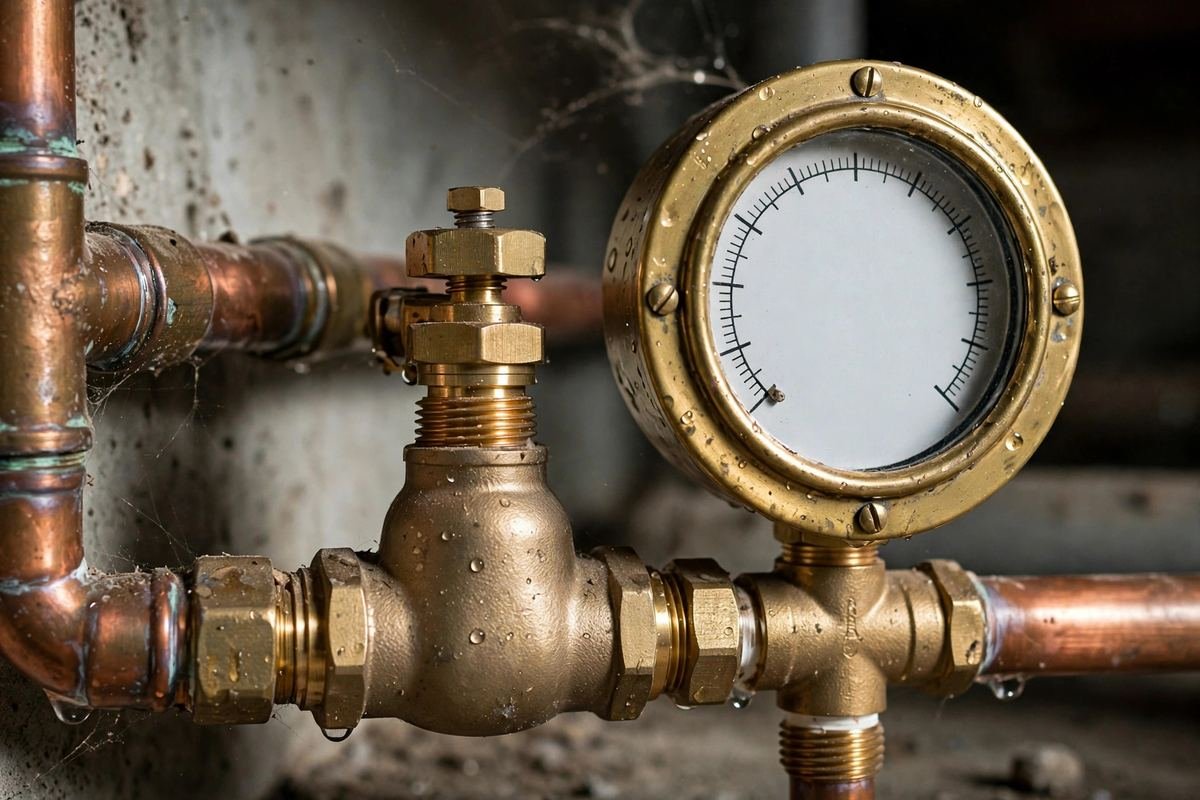
This page explains a common plumbing problem. It is general information, not a diagnosis of any specific home.
High water pressure feels like a luxury — strong showers, fast-filling tubs — until it starts breaking things. Sustained high pressure stresses every joint, valve, hose, and appliance in a home around the clock, and it is a common background cause of leaks that seem to have no other explanation.
The fix is usually simple: a pressure reducing valve that holds the home's pressure in a sensible range. The first step is a reading at the main, because high pressure is a number, not a feeling, and the number decides the response.
Common Causes
- Municipal supply pressure that is high at the street
- A failed or missing pressure reducing valve
- A pressure reducing valve set too high
- Thermal expansion in a closed system raising pressure further
- A regulator that has drifted out of adjustment over years
Safe Checks You Can Do First
- Get a pressure reading at the main — a gauge on an outdoor tap gives a useful number
- Note recurring leaks at fixtures, hoses, and joints — a pattern of them suggests pressure
- Listen for banging when taps close, which often accompanies high pressure
- Check whether a pressure reducing valve exists near the main and whether it looks aged
- Do not adjust a regulator blind; measure first, then set to a sensible range
When Professional Help Fits
If the checks do not resolve the problem, if water is spreading, if sewage is involved, or if gas is suspected, professional help fits now rather than later. For a suspected gas leak, leave the area and call emergency services or the gas utility from a safe location.
Frequently Asked Questions
What pressure is too high for a home?
Most homes are comfortable well below the levels that stress plumbing. A reading far above the moderate range deserves correction, and a plumber can confirm the right setting for the specific system.
How do I know if I have a pressure reducing valve?
It is usually a bell-shaped device on the main line where water enters the home. If none is present and street pressure is high, adding one is a common and effective fix.
Can high pressure really cause leaks?
Yes. It is one of the most common background causes of recurring fixture and joint leaks, burst appliance hoses, and water heater relief valve discharge. Lowering pressure often stops a pattern of failures.
Related Pages
Talk Through Your Plumbing Problem
Describe the fixture, pipe, or drain that is giving trouble, and we will help you understand the next step.
Visit or Contact Us in Dedham
Providence Plumbing Services
300 Providence Hwy, Dedham, MA 02026, USA
(781) 243-5798 · Info@providenceplumbingservices.com