Water Heater Comparison: Tank vs. Tankless, Gas vs. Electric
Choosing a water heater means choosing between systems that work differently, not just different brands of the same thing. Tank heaters store hot water; tankles…
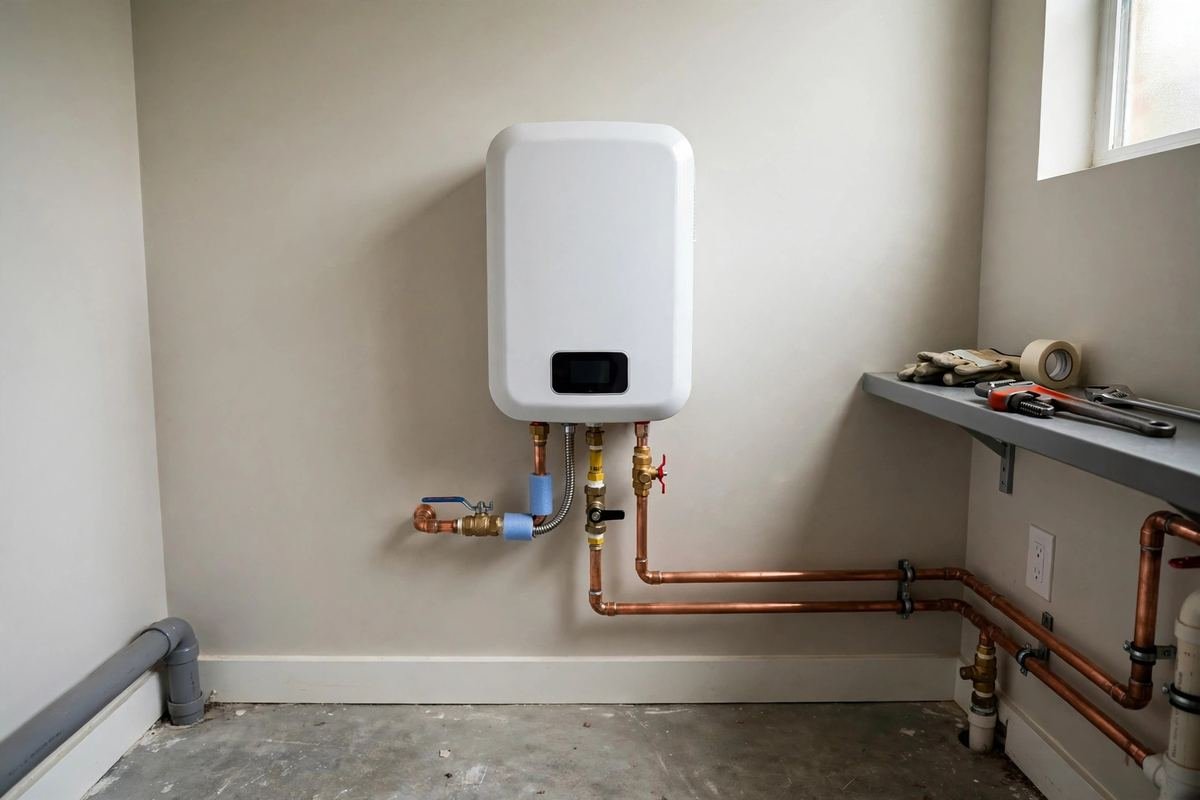
Choosing a water heater means choosing between systems that work differently, not just different brands of the same thing. Tank heaters store hot water; tankless heaters make it on demand. Gas and electric versions of each have their own requirements. This comparison explains how each type works, what it demands of a home, and where each fits best — without promising savings that depend on a specific household.
| Type | How it works | Space | Best suited to | Watch for |
|---|---|---|---|---|
| Tank (gas) | Burner heats stored water | Floor space for a tank | Steady, predictable demand | Sediment, tank corrosion, venting |
| Tank (electric) | Elements heat stored water | Floor space for a tank | Homes without gas supply | Element and thermostat failures, sediment |
| Tankless (gas) | Heats water as it flows | Wall-mounted, compact | High demand with gas capacity | Scale, venting, gas supply size |
| Tankless (electric) | Elements heat water as it flows | Wall-mounted, compact | Smaller demand, no gas | Electrical capacity, flow limits |
How capacity differs
A tank's capacity is its stored volume; a tankless unit's capacity is its flow rate at a given temperature rise. A household that runs several showers at once needs to check the second number, not the first, when considering tankless.
Fuel and venting
Gas units need gas supply and venting; electric units need electrical capacity. Changing fuel type during a replacement often means changing venting or wiring too, which affects the scope of the job.
Maintenance
Tank units need flushing and anode attention; tankless units need descaling and filter cleaning. Both last longer with maintenance, and both fail sooner without it.
Replacement decisions
When a tank fails, the replacement question is not just tank versus tankless — it is capacity, fuel, space, and venting together. A comparison visit weighs those four against the household's real usage.
Frequently Asked Questions
Is tankless always more efficient?
Tankless avoids standby losses, but real-world efficiency depends on usage patterns, incoming water temperature, and the unit's sizing. A well-sized tank and a poorly sized tankless can easily reverse the expected result.
Can I switch from tank to tankless?
Often, yes, but it depends on gas supply or electrical capacity, venting, and space. Those requirements are checked before the switch is recommended, not after.
Which lasts longer?
Both types last longer with maintenance and shorter without it. Tank life is often limited by tank corrosion; tankless life by scale and component wear. Condition matters more than the category.
Talk Through Your Plumbing Problem
Describe the fixture, pipe, or drain that is giving trouble, and we will help you understand the next step.
Visit or Contact Us in Dedham
Providence Plumbing Services
300 Providence Hwy, Dedham, MA 02026, USA
(781) 243-5798 · Info@providenceplumbingservices.com