Tankless vs. Traditional Water Heaters: A Practical Comparison
Tank and tankless water heaters are different systems, not different brands of the same thing, and the right choice depends on a household's demand, fuel supply…
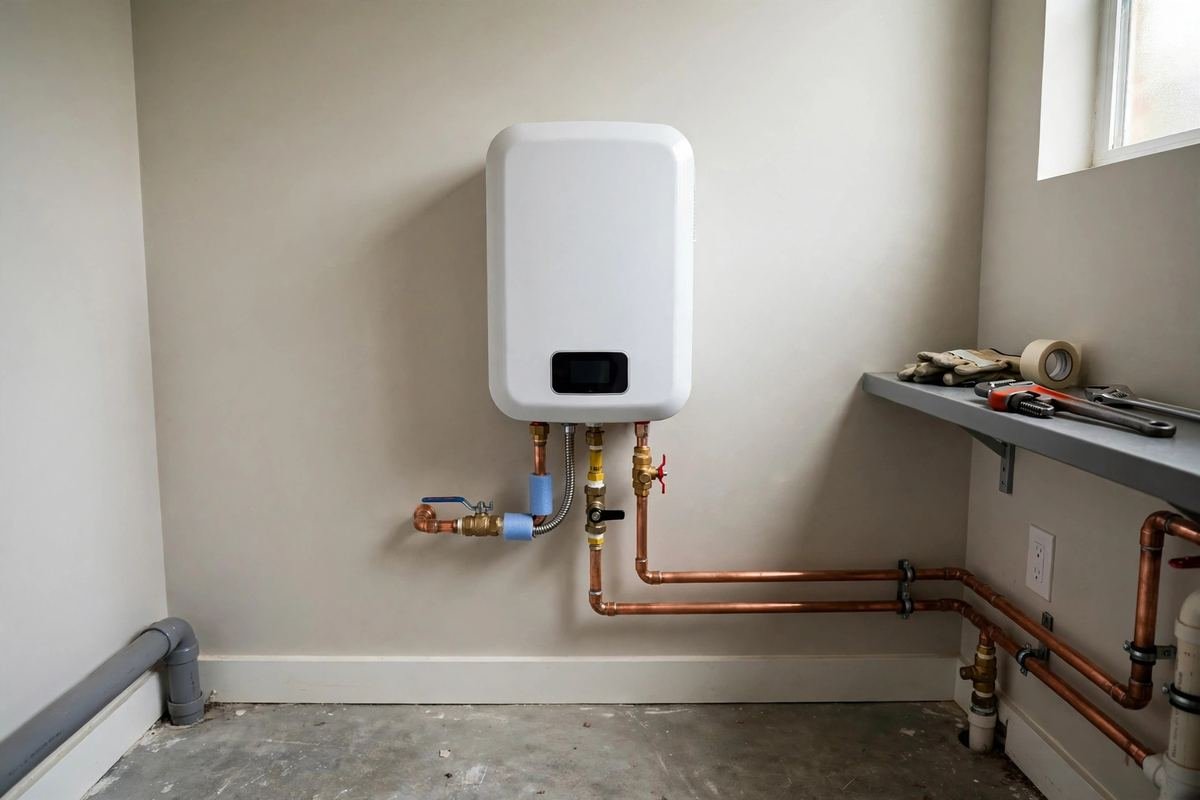
Tank and tankless water heaters are different systems, not different brands of the same thing, and the right choice depends on a household's demand, fuel supply, venting, and space. This article compares them on the factors that actually decide the question.
How they differ
A tank stores hot water and keeps it hot; a tankless heats water as it flows. That single difference drives everything else: capacity means stored volume for one and flow rate for the other, and maintenance means flushing and anodes for one and descaling and filters for the other.
Demand is the deciding factor
A household that runs several showers and appliances at once needs a tankless unit sized for that peak, or it will disappoint. A household with modest, staggered demand may never notice a tankless unit's limits — or a tank's standby losses.
Fuel, venting, and space
Gas tankless units need gas capacity and venting; electric ones need electrical capacity. Tank units need floor space. Changing types during a replacement often means changing one of these, which affects the job's scope.
The honest bottom line
Neither type is universally better. The right unit is the one sized to the household's real peak demand, matched to its fuel and venting, and maintained on its maker's schedule. A comparison visit weighs those four facts together.
Frequently Asked Questions
Is tankless always more efficient?
Tankless avoids standby losses, but real-world efficiency depends on usage, incoming water temperature, and sizing. A well-sized tank and a poorly sized tankless can easily reverse the expected result.
Do tankless units need maintenance?
Yes — descaling and filter cleaning, especially in hard-water areas. Without them, efficiency drops and the heat exchanger wears faster.
Can I switch from tank to tankless?
Often, but gas supply or electrical capacity, venting, and space must be checked first. Those requirements are confirmed before the switch is recommended.
Talk Through Your Plumbing Problem
Describe the fixture, pipe, or drain that is giving trouble, and we will help you understand the next step.
Visit or Contact Us in Dedham
Providence Plumbing Services
300 Providence Hwy, Dedham, MA 02026, USA
(781) 243-5798 · Info@providenceplumbingservices.com